Find out more about the speakers

Ian Bond
Ian Bond has been deputy director of the Centre for European Reform since 2023, having joined the CER as foreign policy director in 2013. Previously, he served as political counsellor and joint head of the Foreign and Security Policy Group at the British Embassy in Washington (2007–12), focusing on US policy towards Europe, the former Soviet Union, Asia and Africa, and as British Ambassador to Latvia (2005–07).
He was deputy head of the UK delegation to the OSCE in Vienna (2000–04), working on human rights, democracy, and conflict prevention and resolution in the Balkans and the former Soviet Union. Earlier postings included Moscow (1993–96) and NATO HQ (1987–90), as well as roles at the Foreign and Commonwealth Office on the former Soviet Union, the EU’s Common Foreign and Security Policy, NATO and UK defence policy.
Marie Mendras
Dr. Marie Mendras is a political scientist specialising in Russian and Ukrainian studies and Europe–Russia relations. She is a professor at Sciences Po (Paris School of International Affairs) and a board member of the Free University, an online humanities faculty founded in Riga. In 2019, she was a visiting professor at Hong Kong Baptist University, and a Kennan Institute expert at the Woodrow Wilson Center in Washington, D.C. in 2016–17. Previously, she was an associate fellow at Chatham House in 2011–16 and taught at the London School of Economics in 2008–09. In 2010, she headed the Direction de la Prospective at the French Ministry of Foreign Affairs.
She studied at the University of Essex, Sciences Po and INALCO (Paris), the Johns Hopkins University SAIS Bologna Center, and the Russian Research Center at Harvard University.
Marie Mendras is the author of Russian Politics: The Paradox of a Weak State (Hurst / Columbia University Press, 2012) and has published widely on Russian domestic politics, authoritarian governance, and Russia–Ukraine relations, including The Rising Cost of Russia’s Authoritarian Foreign Policy (in M. Light & D. Cadier, eds., Russia’s Foreign Policy, Palgrave, 2015), Russian Elites Worry: The Unpredictability of Putinism (GMF, 2016), Ukraine–Russie : trente ans de divorce (Esprit, July–August 2019), and Tyranny and War: How Putin Gambles His Rule on Ukraine (The Tocqueville Review / Revue Tocqueville, Vol. 44, No. 2, 2024). Her latest book is La guerre permanente. L’ultime stratégie du Kremlin (Calmann-Lévy, 2024).

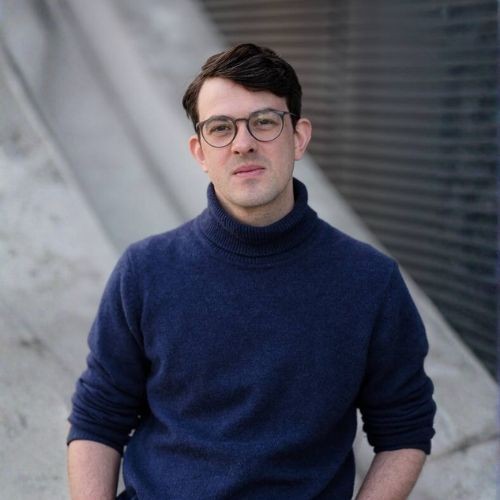
Oliver Moody
Oliver Moody is Berlin correspondent and bureau chief for The Times and The Sunday Times, covering Germany, Scandinavia, central Europe and the Baltics. He joined The Times as a graduate trainee in 2011 and has since worked as a general reporter, leader writer and science correspondent. In 2018, he was named Science and Data Commentator of the Year and Young Commentariat of the Year at the UK Comment Awards. He was journalist in residence at the WZB Berlin Social Science Centre in 2024. He lives in Berlin with his wife and their two young children, and is the author of Baltic: The Future of Europe (John Murray Press, 2025).
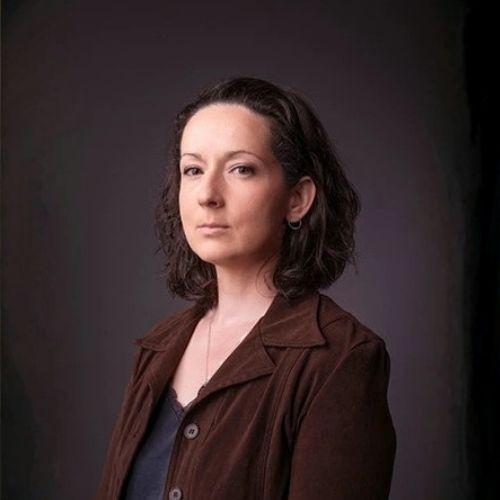
Elena Volochine
Elena Volochine is a French-Russian senior reporter, videographer and filmmaker. Born in Moscow, she studied and began her career in France in 2009. In 2012, she moved to Moscow, where she covered regional current affairs for i-TELE, Canal+, Arte, France Télévisions and other French and French-language media outlets. In 2016, she became head of the Moscow bureau of the international channel France 24. After her abrupt return to France in March 2022, she published the essay Propaganda, Vladimir Putin’s Weapon of War, which was awarded the prestigious Albert Londres Prize.
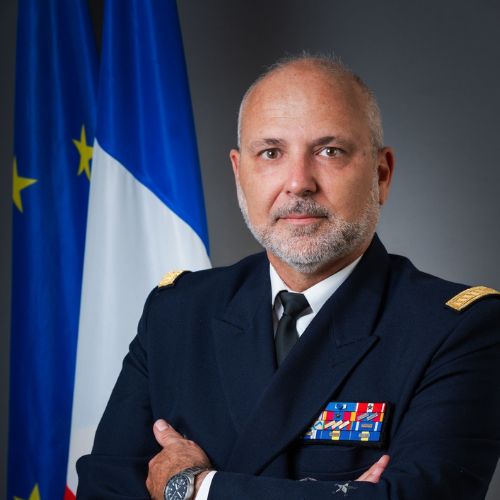
Vice-Admiral Luc Raynal
Vice Admiral Raynal has been the head of the French Embassy defence staff in London since 1 August 2024. A key player in the bilateral defence relationship between France and the United Kingdom, he continues work initiated in central administration since 2022, at the heart of France's defence strategy for the Euro-Atlantic area and partnerships with allied and partner nations.
Vice Admiral Raynal served in surface forces for the first part of his career after joining the Naval Academy in 1988. Counting more than fifteen years of sea assignments and numerous operational deployments (former Yugoslavia, Libya, Eastern Mediterranean, Indian Ocean, etc.), in the warfare domain on combat ships (frigates, aircraft carrier).
He also temporarily left active service to work for a shipping company, developing trans-Pacific and pan-American commercial lines. This part of his career is crowned by three sea commands: the offshore patrol vessel La Tapageuse stationed in the Pacific (1998–1999), the frigate Commandant Bouan (2004–2005), and the frigate Dupleix (2011–2013), both stationed in the Mediterranean.
Politico-military relations between allies notably mark the second part of his career in central administration. He had the privilege of serving several times in the United Kingdom (2006–2009, 2017–2020) and that of being an alumnus of the École de Guerre in Paris, the NATO Defence College in Rome or the German Marshall Fund defence and security programme.