Find out more about the speakers

Jonas Erin
Jonas Erin is a senior civil servant, seconded to the Inspectorate-General for Education, Sport and Research, where his areas of expertise include plurilingual and intercultural education, education for democratic citizenship, organisational transformation, AI, and youth and sport policies. He is the IGESR regional adviser for the Martinique education authority and also serves as a crisis-management liaison officer for the Ministry of National Education.
An expert at the European Centre for Modern Languages of the Council of Europe since 2013, he has led an action-research project on learning environments and organised advisory and training activities in numerous member states. He is co-author of the Council of Europe's Recommendation of the Committee of Ministers to member States on the importance of plurilingual and intercultural education for democratic culture (2022) and of the Motivation Manifesto (2025).
Rebecca Eynon
Rebecca Eynon holds a joint academic post between the Oxford Internet Institute (OII) and the Department of Education at the University of Oxford. Her research explores the relationships between education, the Internet and inequalities.
Her work has been supported by a range of funders including the British Academy, the Economic and Social Research Council, the European Commission and Google. She was co-editor of Learning, Media and Technology from 2011–2021. She is currently on the editorial board for Learning, Media and Technology and Information and Learning Sciences.
Rebecca currently leads a project titled Towards Equity-Focused Approaches to EdTech – one of nine projects funded by the ESRC Education Programme – and is an international investigator for the ARC Centre for the Digital Child.
Rebecca teaches on the MSc in Social Science of the Internet at the OII and on the MSc in Education (Digital and Social Change) at the Department of Education. In both departments, she supervises DPhil students interested in digital education and social justice.

- Picture: John Cairns

Jasmine Sekou
Jasmine Sekou has been part of the Stemettes community since 2019, first joining as a participant in their programmes. She later volunteered as a programming instructor for a Stemettes Python Certification Academy cohort. Teaching Python gave her a deeper appreciation for how thoughtful design and clear explanations can help young people engage with STEM learning. Additionally, through the Stemettes Speakers initiative, she has facilitated activities at Stemettes events, supporting the charity’s mission to make STEAM accessible and inclusive for young women and non‑binary people.
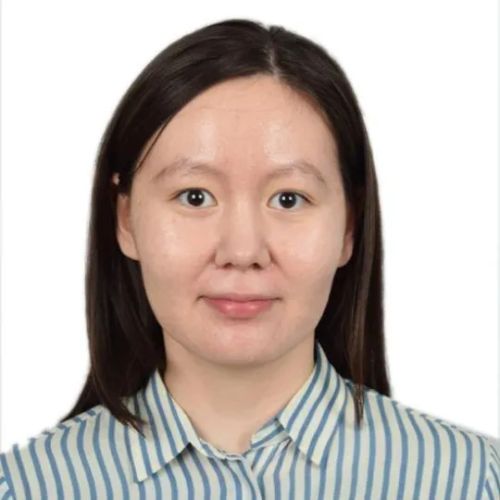
Dr. Maira Klyshbekova
Dr. Maira Klyshbekova is a Postdoctoral Research Associate in Artificial Intelligence and Education at King’s College London. Her research undertakes an interdisciplinary approach, exploring the intersection of education and AI. She is an active member of the Responsible Artificial Intelligence UK (RAi UK) Skills Pillar. Within this pillar, Dr. Klyshbekova contributes to initiatives that promote the development of innovative training resources and frameworks for Responsible AI, with the aim of delivering best practices for learners, educators, and training providers. She also serves as Co-Convenor of the Artificial and Human Intelligence Special Interest Group at the British Educational Research Association.