Find out more about the speakers

Dr Alexandra Mullock
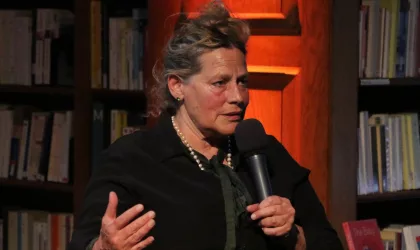
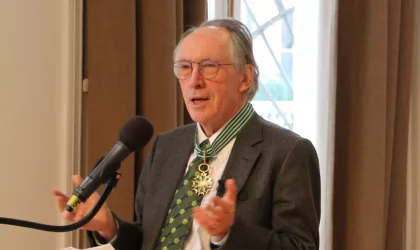
Dr Alexandra Mullock is a Senior Lecturer in Medical Law at the University of Manchester. Her research interests include end-of-life law and ethics, reproductive law and ethics, and the role of the criminal law in relation to harmful medical misconduct. Alex has undertaken policy and advisory work on assisted dying, supporting the Government of Jersey and Nuffield Bioethics Council Citizen’s Juries, co-authoring the Ethical Review of the proposed Jersey law in 2023, a report on the draft law in 2025, and giving oral evidence to the Health and Social Care Committee on Assisted Dying (2023) and the Committee on the Terminally Ill Adults (End of Life) Bill 2024-25.
Dr Annabel Price
Dr Annabel Price trained in medicine at the Royal Free Hospital School of Medicine, London, before training in General Adult, Old Age and Liaison Psychiatry on the Maudsley Hospital Rotation, London. Annabel went on to be a Clinical Lecturer in Palliative Care Psychiatry. Currently, Annabel is a Consultant Liaison Psychiatrist, Older People’s Team, Addenbrooke's Hospital, and a teaching specialist in palliative care.


Bernard Stirn
Bernard Stirn was a professor at Sciences Po until 2023 and is the author of numerous works, in particular Les libertés en questions (14th edition, 2025). Chair of the Board of Directors of the Opéra national de Paris from 2001 to 2018, he is now its Honorary Chair. Elected to the Académie des sciences morales et politiques in 2019, he has been its Permanent Secretary since 2023.
Soazick Kerneis
Soazick Kerneis is a Professor of Legal History and Roman Law at Université Paris-Nanterre and is Director of the Centre for the History and Anthropology of Law. Her research focuses primarily on processes of acculturation in the Roman Empire from a legal perspective, particularly the gap between written norms – understood as rational or perceived as such – and customary norms. Her work examines two periods of Roman history and concentrates on the western provinces, Gaul and Britain, first at the time of conquest and later in the fourth and fifth centuries, following the settlement of barbarian communities.