Roland, Turoldus and the Bayeux Tapestry: Storytelling in the World of 1066
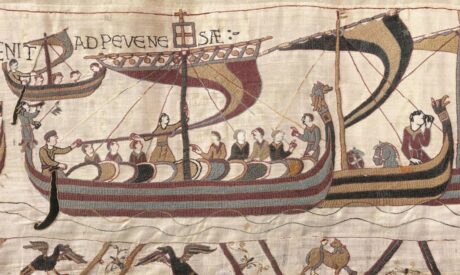
Thu 25 FebThe Oxford Chanson de Roland, preserved in a unique manuscript written in Anglo-Norman and held in the Bodleian Library, is a heroic tale of warfare, loyalty and moral anguish whose poetry and emotional power continue to resonate today. According to tradition, the poem was sung to William the Conqueror’s Norman army at the Battle of Hastings in 1066. Intriguingly, among the many figures depicted on the Bayeux Tapestry is a small figure named Turold, a characteristically Norman name that also appears at the end of the Chanson de Roland: Ci falt la geste que Turoldus declinet (“Here ends the story which Turoldus makes known”).
Taking this tantalising connection as its starting point, Sophie Marnette, Professor of Medieval French Studies and Helen Swift, Professor of Medieval French Literature at the University of Oxford, will explore the origins and oral style of the Chanson de Roland, the distinctive voice of its narrator, its ideological values, and how it shapes iconic figures out of its characters. Why does the Anglo-Norman Oxford version—the earliest complete surviving version of the poem—remain so compelling? And what might this story of heroism, loyalty, conflict and betrayal have meant to audiences living in the world of the Bayeux Tapestry, on both sides of the Channel?