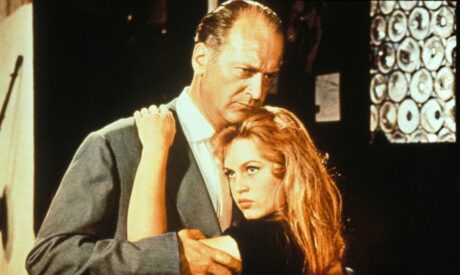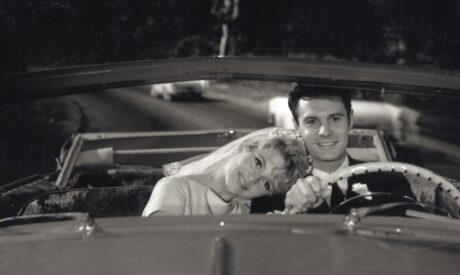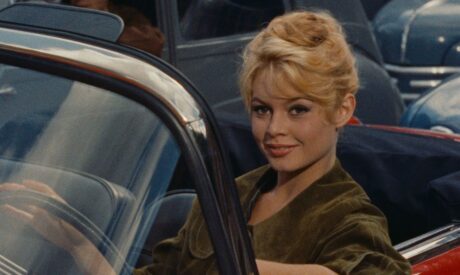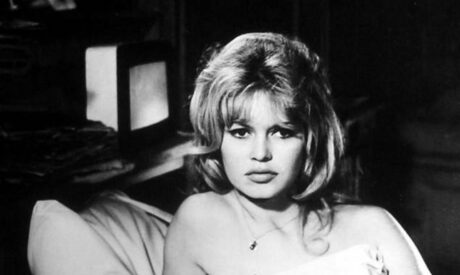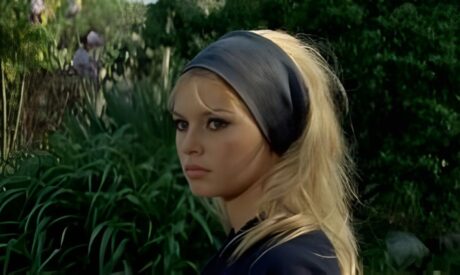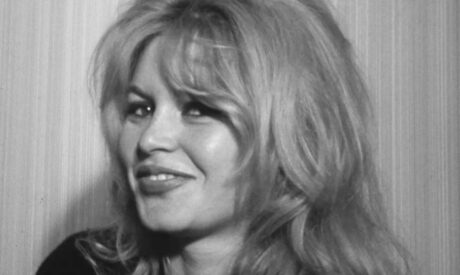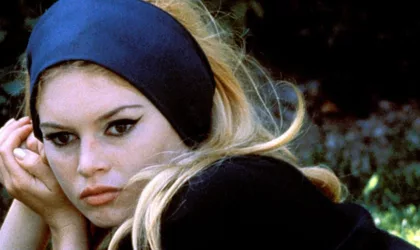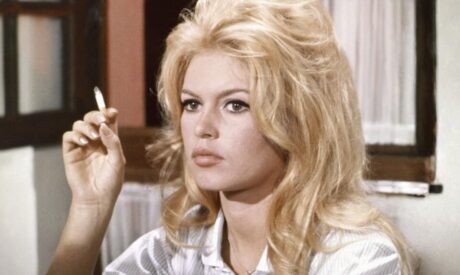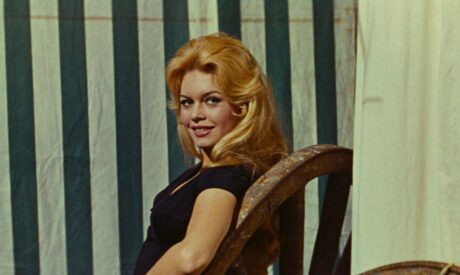
In her relatively short, 20-year career, Bardot starred in nearly 50 films.
She caused a veritable revolution in the representation of women and female desire in the conservative and patriarchal 1950s and early 60s. In most of her films and beyond the cliché of the ‘sex bomb’ that came to define her, she is a uniquely modern, fiercely independent figure. Adulated by her fans and pursued by paparazzi, she was, in equal measure, the object of violent hostility.
After playing in a few light comedies, her breakthrough came with Vadim’s first film, And God Created Woman, which caused a commotion when it came out in December 1956. It then acquired a powerful international aura of scandal after its American release in September 1957, when powerful figures called for its banning. A publicity tag ran, “and God created woman… but the devil invented Brigitte Bardot”.
From then on, Bardot became a star and a celebrity on an unprecedented scale, a ‘phénomène de société’ endlessly scrutinised, photographed and discussed in what was termed Bardomania.
Read more
This season includes box-office hits such as The Bride is too Beautiful (1956) and La Parisienne (1957), both comedies in which she plays a variation of the ‘dumb blond’ while putting forward her sense of independence; and also one of her most complex role, not least because of the tempestuous relation with director H.G. Clouzot: La Vérité (1960).
A Bardot season would not exist without her work with New Wave directors Louis Malle and Jean-Luc Godard, who made films about her rather than with her: respectively, the quasi-autobiographical A Very Private Affair (1962) and Le Mépris (1963). The bardomania is equally reflected in Jacques Rozier’s short documentaries Paparazzi and Le Parti des choses, filmed during the shooting of Le Mépris.
Bardot’s celebrity went beyond her films, anticipating celebrity culture by decades. Eminent writers, journalists and photographers were obsessed with her private life and what she represented, including Simone de Beauvoir and Marguerite Duras
She retired from filmmaking in 1973 and devoted the rest of her life, as well as her personal fortune, to animal welfare, creating the Fondation Brigitte Bardot in 1985.
Over the years, still harassed by fans and photographers, she became an increasingly isolated and controversial figure, expressing racist views for which she was convicted several times, as well as anti #MeToo movement statements, further distancing herself from the mainstream. The new documentary Bardot (2025), which will receive its UK Premiere on 6 May, takes us on a journey through the different phases of Bardot’s life, fame and engagement, bringing nuance to a life too often reduced to a single dimension.